Figuring out how to manage weeds in organic farming can feel a bit tricky at first. Many new farmers wonder about the best ways to tackle this. It’s a common challenge.
But don’t worry, keeping your crops weed-free the natural way is totally doable. We’ll walk through simple, easy steps. We will cover straightforward techniques that make a big difference for your farm.
Key Takeaways
- You will learn about several effective physical methods for weed removal.
- Discover how to use natural elements like mulch and cover crops to suppress weeds.
- Understand the role of crop rotation in preventing weed problems.
- Explore the benefits of biological weed control.
- Gain insights into selecting the right methods for your specific farm.
Understanding Organic Farming Weed Control Methods
When you farm organically, you avoid using synthetic herbicides. This means you rely on nature’s own ways to keep weeds from taking over your fields. These methods work with the soil and plants, not against them.
They are about creating a healthy farm ecosystem where weeds have a harder time growing strong. For beginners, this can seem like a lot to learn. You might wonder if it’s as effective as chemical options.
But with the right knowledge, you can manage weeds successfully and grow healthy crops.
The Importance of Weed Management in Organic Systems
Weeds compete with your crops for sunlight, water, and nutrients. If left unchecked, they can significantly reduce your harvest. In organic farming, this competition is a bigger concern because you don’t have chemical sprays to quickly eliminate weeds.
Therefore, a proactive and integrated approach is essential. Effective weed control is not just about removing weeds; it’s about building a resilient farm system that naturally resists weed pressure.
Healthy soil is the foundation of any successful organic farm. When soil is rich and full of life, plants grow stronger and are better able to outcompete weeds. This means focusing on building soil health through practices like composting and cover cropping is also a form of weed control.
It’s a holistic view where every aspect of the farm works together.
Think of it like building a strong defense. Instead of a quick fix, you are creating an environment where weeds struggle to get a foothold. This requires planning and consistent effort, but the rewards are a healthier farm and better crops in the long run.
Challenges for Beginners
New organic farmers often face the challenge of labor. Many manual or mechanical weed control methods require significant time and effort. It can also be hard to know which method works best for different types of weeds and crops.
Sometimes, it takes trial and error to find the right fit for your specific farm conditions. You might also worry about the cost of equipment or tools needed for some methods.
Another hurdle can be timing. Certain weed control techniques are most effective when applied at specific times. For example, mulching is best done before weeds emerge.
If you miss the window, you might have to use other methods. Understanding the life cycle of common weeds can help you plan your approach.
The sheer variety of available methods can also be overwhelming. From hand-pulling to sophisticated machines, there are many options. Figuring out which ones are practical and cost-effective for a small or new farm can be a puzzle.
This guide aims to simplify those choices for you.
Physical Weed Control Methods
Physical weed control involves using direct methods to remove or prevent weeds from growing. These are often the most immediate and visible forms of weed management. They are a cornerstone of organic farming because they directly address the weed problem without introducing harmful chemicals.
Understanding these techniques allows farmers to take active control over their fields.
Hand Weeding
Hand weeding is exactly what it sounds like: pulling weeds out of the ground by hand. It is very effective for removing weeds when they are small and before they go to seed. This method is ideal for smaller gardens or for dealing with weeds in tight spaces between crops where machines cannot reach.
It requires patience and attention to detail. The goal is to remove the entire weed, including its roots, to prevent it from growing back. For certain persistent weeds with deep taproots, this can be challenging.
However, for many common weeds, it’s a direct and simple solution. It also gives you a chance to observe your crops and soil closely.
The main drawback is the labor involved. For larger farms, hand weeding can be time-consuming and expensive if you need to hire help. However, for smaller operations or for spot weeding problematic areas, it remains a valuable tool.
It’s a very precise way to manage weeds.
Hoeing
Hoeing is another fundamental physical method. It involves using a hoe to cut weeds at or just below the soil surface. This is done when weeds are small and the soil is dry, as this makes it easier to cut them off and prevents them from re-rooting.
Different types of hoes are available, such as stirrup hoes, scuffle hoes, and standard hoes, each suited for different conditions and tasks.
Stirrup hoes, also known as oscillating hoes, have a U-shaped blade that cuts weeds on both the push and pull strokes. They are very efficient for large areas. Scuffle hoes also work by slicing through weeds just below the surface.
These tools are designed to minimize soil disturbance while maximizing weed removal.
Timing is key with hoeing. The best results are achieved when weeds are young and still in their seedling stage. If you hoe a large weed with a well-developed root system, you may only cut off the top, and it can regrow.
Regularly hoeing keeps weed populations low and prevents them from becoming a major problem.
Consider this scenario: You have a row of young carrots. Small weeds are starting to pop up between the carrot plants. Using a sharp stirrup hoe, you can carefully glide it just under the surface of the soil.
This slices off the weed seedlings without disturbing the carrot roots. Doing this regularly prevents the weeds from shading or competing with the carrots.
Tilling and Cultivation
Tilling, especially shallow tilling, can be used to control weeds. This involves using machinery like rototillers or field cultivators to turn over the top layer of soil. This process uproots small weeds and buries them, or exposes them to dry out.
It’s often done before planting or between rows of crops.
Rototillers chop up the soil and any vegetation within it. Field cultivators use S-shaped tines to lift and churn the soil, uprooting weeds. Both methods can be effective for preparing a seedbed or managing weeds in established fields, depending on the type of equipment and how it’s used.
However, excessive tilling can harm soil structure and bring dormant weed seeds to the surface, where they can germinate. For organic farming, the focus is often on minimal or strategic tilling to preserve soil health. Some organic farmers use “rotary tillers” or “rotary hoes” that work the surface layer of soil to uproot tiny weed seedlings without deep disturbance.
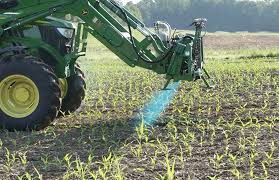
A farmer plants corn. After the corn emerges, they use a tractor-pulled cultivator with S-tines. This machine passes between the rows of corn, loosening the soil and uprooting any small weeds that have started to grow there.
This helps the corn grow without competition.
Here’s a quick comparison of shallow tilling tools:
| Tool | Action | Best For |
|---|---|---|
| Rotary Tiller | Chops and mixes soil. | Initial seedbed preparation, tough soil. |
| Field Cultivator | Lifts and churns soil with tines. | Weed control between rows, soil aeration. |
| Rotary Hoe | Lightly scratches and uproots surface weeds. | Young weed seedlings, shallow cultivation. |
Flame Weeding
Flame weeding uses a controlled flame to kill weeds. A propane-fueled torch is passed over the weeds, heating them rapidly. This causes the plant’s cells to burst, killing the weed.
It’s most effective on young, actively growing weeds, especially annuals. It works by damaging the plant tissue, causing it to die.
This method is often used in areas where mechanical weeding is difficult, such as around young plants, in gravel paths, or on farm equipment. It’s important to use flame weeders carefully to avoid damaging crops or starting fires. The heat needs to be applied just long enough to rupture the cells, not to burn the plant to ash.
Flame weeding is particularly useful for pre-emergent weed control. A farmer can flame the soil surface just before crops emerge. This kills any tiny weed seedlings that have just sprouted, giving the crops a clean start.
It’s a chemical-free way to manage weeds before they become established.
A vegetable farmer is preparing a bed for spinach. They lightly till the soil, and then some tiny weed seedlings begin to appear. Before sowing the spinach seeds, they use a propane torch designed for weeding.
They quickly sweep the flame over the surface of the bed. This kills the small weed seedlings. Then, they sow the spinach seeds into the now cleaner soil.
Natural and Biological Weed Control
Beyond direct physical removal, organic farming utilizes natural processes and living organisms to manage weeds. These methods focus on creating an environment that discourages weed growth or uses natural enemies of weeds to keep them in check. They are sustainable and beneficial for the overall health of the farm ecosystem.
Mulching
Mulching is a popular and effective technique. It involves covering the soil surface with a layer of material. This layer blocks sunlight, preventing weed seeds from germinating and growing.
It also helps retain soil moisture and regulate soil temperature, which benefits your crops.
Organic mulches include materials like straw, hay, wood chips, shredded leaves, and compost. These materials break down over time, adding nutrients and organic matter to the soil. Plastic mulches are also used, but these are less common in strictly organic systems due to concerns about plastic waste.
However, biodegradable plastic mulches are becoming more popular.
The thickness of the mulch layer is important. A layer of 2-4 inches is generally sufficient to suppress most weeds. It needs to be applied consistently around plants, ensuring no gaps where weeds can sprout.
For larger areas, machines can be used to spread mulch efficiently.
A gardener plants tomatoes. After the plants are established, they spread a thick layer of straw around the base of each plant, extending out several inches. This straw acts as a mulch.
It keeps the soil moist, suppresses weeds that would otherwise grow in the bare soil, and keeps the soil cool. The weeds that do manage to poke through the straw are usually much easier to pull.
Cover Cropping
Cover crops are plants grown specifically to improve the soil and suppress weeds. They are planted outside of the main growing season, or between main crops. Some cover crops are chosen for their ability to grow densely and outcompete weeds, while others have specific weed-suppressing properties.
Leguminous cover crops like clover and vetch can fix nitrogen in the soil, adding fertility. Other cover crops, like rye and buckwheat, grow quickly and can smother existing weeds and prevent new weed seeds from germinating. When the cover crop is finished growing, it can be tilled into the soil as a “green manure” or left on the surface as mulch (known as “chop and drop”).
For example, planting a dense stand of cereal rye in the fall can create a thick mat of vegetation that suppresses winter annual weeds. In the spring, the rye can be mowed and incorporated into the soil, providing organic matter and weed control. Buckwheat is a fast-growing summer cover crop that can quickly cover bare ground and suppress weeds.
Imagine a farmer finishes harvesting their potatoes in the fall. Instead of leaving the field bare, they sow a mix of winter rye and hairy vetch. This cover crop grows through the winter and spring, forming a dense mat.
This mat prevents weeds from growing and adds nitrogen to the soil. In late spring, before planting the next crop, the farmer tills the cover crop into the soil. This adds organic matter and suppresses any weeds that were starting to emerge.
Here are some popular cover crops and their weed suppression benefits:
- Cereal Rye: Grows very densely, outcompeting many weeds. It also releases allelopathic chemicals that can inhibit weed seed germination.
- Buckwheat: Grows rapidly and forms a thick canopy, shading out weeds. It is a good choice for quick weed suppression in warmer months.
- Hairy Vetch: A legume that fixes nitrogen and also grows to form a dense mat, suppressing weeds effectively.
- Sudangrass: A vigorous grass that grows tall and thick, smothering weeds with its dense foliage.
Biological Control
Biological control involves using natural enemies of weeds, such as insects or pathogens, to reduce weed populations. This is a more advanced technique, often studied and implemented by researchers and specialized farms. The idea is to introduce or encourage specific organisms that target particular weed species.
For instance, certain beetles have been used to control invasive thistles. Fungi can also be used as bioherbicides to target specific weeds. This method requires careful study to ensure that the introduced organisms do not harm beneficial plants or other ecosystems.
It’s about finding a natural balance.
While not as common for small-scale farmers to implement directly, understanding the principles of biological control highlights the sophisticated ways nature can manage unwanted plants. It emphasizes that a healthy ecosystem naturally controls pest populations, including weeds.
Crop Rotation
Crop rotation is a strategic farming practice where you change the types of crops grown in a particular field each season. This practice helps break the life cycles of weeds that are specific to certain crops. Some weeds thrive in the conditions created by one type of crop, and by changing the crop, you change those conditions.
For example, if a field consistently grows a crop that is heavily mulched, certain shallow-rooted weeds might become more prevalent. Rotating to a crop that requires more intensive cultivation or has different nutrient needs can disrupt the weed’s preferred environment. Different crops also have different planting and harvesting times, which can interfere with weed reproduction cycles.
A three-year crop rotation might look like this: Year 1: Corn (requires cultivation between rows). Year 2: Clover (dense ground cover). Year 3: Potatoes (requires hilling, which buries weeds).
This rotation prevents any single weed species from becoming too established because the conditions change each year.
This also helps in managing diseases and pests, making it a multi-benefit strategy. By varying the planting density, root structure, and nutrient uptake, you create a less predictable environment for weeds to establish themselves. It’s a long-term strategy for building farm resilience.
Integrating Organic Farming Weed Control Methods
The most successful organic farms don’t rely on just one or two weed control methods. Instead, they use a combination of techniques, called an integrated weed management system. This approach is more effective, sustainable, and resilient than relying on a single tactic.
It involves planning and adapting to the specific needs of the farm.
Developing an Integrated Weed Management Plan
An integrated weed management plan is like a playbook for keeping your fields weed-free. It starts with understanding the weeds present on your farm. Knowing their life cycles, how they spread, and what conditions they prefer is key.
Then, you select a mix of methods that will work best for your crops and your resources.
For instance, you might plan to use shallow tilling before planting to prepare the seedbed and kill early weeds. Then, you would mulch around your crops to suppress later-emerging weeds. If a particular weed is known to be a problem, you might incorporate a cover crop that is especially good at outcompeting it.
Regular scouting is also an important part of the plan. This means walking through your fields often to look for weeds. Catching weeds when they are small and easy to remove is much more efficient than dealing with them when they have grown large and produced seeds.
Your plan should include a schedule for these scouting activities.
A small organic farm might plan their year as follows:
- Spring Preparation: Shallow tillage to prepare beds, followed by immediate planting of crops.
- Early Season: Hand-pulling any visible weeds near young plants.
- Mid-Season: Applying mulch (e.g., straw) around established crops to suppress ongoing weed growth.
- Between Crops: Planting a fast-growing cover crop like buckwheat to prevent weeds from taking over empty beds.
- Fall Cleanup: Removing crop residue and planning for winter cover crops.
The Role of Healthy Soil and Crops
Healthy soil is fundamental to weed control in organic farming. When soil is rich in organic matter and has good structure, plants grow more vigorously. Stronger, healthier crops are better able to compete with weeds for resources like sunlight, water, and nutrients.
This means that practices that build soil health, like composting and adding organic matter, are also indirect but powerful weed control methods.
Similarly, healthy crops are more resilient. They can tolerate a certain level of weed pressure without significant yield loss. Practices that promote crop health, such as proper spacing, adequate watering, and balanced nutrient supply, all contribute to a farm’s ability to manage weeds naturally.
It’s about creating an environment where your crops thrive and weeds struggle.
Consider a situation where a farmer has slightly nutrient-poor soil. Their crops might grow slowly and be weaker. In this condition, even a few weeds can quickly overpower the young plants.
However, if that farmer has focused on building soil health over time, their crops will be robust and better able to withstand competition from weeds. This shows how interconnected soil health and crop vigor are in weed management.
Timing and Persistence
Timing is critical in organic weed control. Many methods are most effective when applied at the right moment. For example, hoeing is best done when weeds are very young.
Mulch is most effective when applied before weed seeds germinate. Flame weeding works on emerging seedlings.
Persistence is equally important. Weed seeds can remain viable in the soil for many years. This means that consistent effort over time is needed to reduce weed populations.
You may not eliminate all weeds in a single season, but with persistent application of appropriate methods, you can significantly decrease their numbers and impact.
It’s a continuous cycle. Each year, you learn more about the weeds on your farm and refine your strategies. This dedication to timing and persistence pays off by creating a cleaner, more productive farm in the long run.
It’s about managing the weed seed bank in the soil.
Weed Prevention Strategies
The best weed control is often prevention. This involves stopping weeds from getting established in the first place. Techniques like using clean seed, preventing weeds from going to seed, and managing farm equipment to avoid spreading weed seeds are all part of prevention.
Cleaning tools and machinery that move between fields is essential. A cultivator that has been in a weedy field could easily carry seeds to a clean one. Similarly, using certified weed-free seed for your crops ensures you aren’t introducing new weed problems.
Managing compost piles to ensure weed seeds are killed by heat is also a preventative measure.
Allowing weeds to go to seed is like planting more weeds for next year. If you notice a patch of weeds starting to flower, it’s crucial to remove them before they produce seeds. This single action can save a lot of work in future seasons.
This proactive approach minimizes the need for reactive measures.
Common Myths Debunked
Myth 1: Organic farming means more weeds
This is a common misconception. While organic farmers don’t use synthetic herbicides, they employ a wide range of effective methods to manage weeds. These include mulching, cover cropping, crop rotation, and mechanical methods like hoeing.
When implemented effectively, organic weed control can be just as successful as conventional methods in the long term, leading to healthier soil and crops.
Myth 2: Organic weed control is too labor-intensive to be practical
While some organic methods, like hand-weeding small areas, are labor-intensive, many others are quite efficient. Techniques like using efficient hoes, cultivators, flame weeders, and mulching can significantly reduce labor. Furthermore, preventative measures like cover cropping and crop rotation reduce the overall weed pressure, meaning less labor is needed throughout the growing season.
The focus is on smart, strategic use of labor rather than brute force.
Myth 3: You can’t control weeds effectively without chemicals
This is untrue. Organic farming has developed sophisticated and effective weed control strategies over decades. These methods harness natural processes and physical interventions.
While chemical herbicides offer a quick kill, they can have negative impacts on soil health and the environment. Organic methods, while sometimes requiring more planning, build soil health and create a more resilient farm system that naturally suppresses weeds over time.
Myth 4: Biological control is too risky and unpredictable
Biological control agents are carefully studied before being approved for use. When used correctly, they target specific weed species without harming beneficial organisms or crops. While there are always risks with introducing any living organism, modern biological control methods are rigorously tested to ensure they are safe and effective.
For most small to medium-scale organic farms, focusing on physical, cultural, and mulching techniques is more practical than implementing complex biological controls.
Frequently Asked Questions
Question: What is the easiest organic weed control method for a beginner?
Answer: For beginners, mulching with straw or compost is often the easiest and most effective starting point. It’s simple to apply and provides great weed suppression around plants.
Question: How often should I hoe my garden?
Answer: Hoeing is best done frequently, especially when weeds are small. Aim for once a week or even more often if weeds are growing rapidly, particularly after rain.
Question: Can cover crops really prevent weeds?
Answer: Yes, dense cover crops can effectively smother weeds by blocking sunlight and outcompeting them for resources. They also improve soil health, making it harder for weeds to establish.
Question: What is a good crop rotation for weed control?
Answer: Rotating crops with different growth habits and management needs helps disrupt weed cycles. For example, following a row crop with a dense cover crop or a deep-rooted crop can be very effective.
Question: Are there any tools that make organic weeding faster?
Answer: Yes, tools like stirrup hoes, scuffle hoes, and wheeled cultivators can make weeding much faster and more efficient than using a simple hand trowel or garden hoe.
Summary
Managing weeds in organic farming is about working with nature. You can use physical methods like hoeing and mulching, and natural strategies like cover cropping and crop rotation. By combining these techniques and staying persistent, you can successfully keep weeds in check.
Focus on building healthy soil and healthy crops for the best results.