Getting started with organic farming in india can seem tricky at first. Many people wonder if it’s too hard or too expensive for beginners. Don’t worry, it’s simpler than you think!
This guide breaks it all down for you. We will walk you through each step so you can start your own organic farm easily. We’ll cover everything from what you need to know to how to do it right.
Key Takeaways
- You will learn the basic principles of organic farming.
- Discover the benefits of organic farming for health and the environment.
- Understand the challenges and how to overcome them in India.
- Find out about government support and certifications for organic farmers.
- Learn practical tips for starting your own organic farm.
What is Organic Farming
Understanding Organic Farming Principles
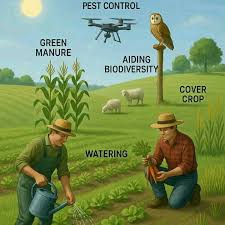
Organic farming is a way of growing food that works with nature, not against it. It focuses on building healthy soil, using natural methods to control pests and diseases, and avoiding synthetic chemicals. This approach helps protect the environment and produces food that is good for you.
It’s all about creating a balanced ecosystem on your farm. This means encouraging beneficial insects and microbes. It also involves careful planning and observation.
Soil Health is Key
Healthy soil is the foundation of organic farming. Organic farmers enrich the soil using natural materials like compost and manure. This builds up soil structure, making it better at holding water and nutrients.
Good soil also supports a wider range of life, from earthworms to helpful bacteria. These tiny helpers break down organic matter and make nutrients available for plants. They also help plants resist diseases.
- Composting turns kitchen scraps and yard waste into nutrient-rich soil food. This reduces waste and improves soil fertility.
- Using cover crops, like legumes or grasses, protects the soil from erosion. They also add nutrients back into the soil when tilled in.
- Crop rotation involves planting different crops in the same field in a sequence. This helps prevent soil nutrient depletion and reduces pest buildup.
Composting is a vital practice. It transforms farm waste into valuable fertilizer. This saves money on buying artificial fertilizers.
Farmers can create compost piles using crop residues, animal manure, and kitchen waste. The decomposition process, driven by microbes, breaks down these materials into a dark, crumbly substance rich in nutrients. This compost is then spread on the fields, adding organic matter and improving soil structure.
Cover crops are planted during off-seasons. They help prevent soil erosion from wind and rain. When these crops are turned back into the soil, they add organic matter and essential nutrients.
Leguminous cover crops, for instance, fix nitrogen from the air, providing a natural source of this vital nutrient for future crops.
Crop rotation is a smart way to manage soil fertility and pests. Instead of planting the same crop year after year, farmers switch crops. This prevents specific pests and diseases from building up in the soil.
It also helps balance nutrient use. For example, planting a nitrogen-fixing crop like beans after a nutrient-demanding crop like corn can replenish the soil.
Natural Pest and Disease Management
Organic farming avoids synthetic pesticides and herbicides. Instead, it uses natural methods to manage pests and diseases. This can include using beneficial insects, companion planting, and organic sprays made from plants.
The goal is to create a farm environment where pests are kept in check naturally. This protects the ecosystem and the health of farm workers and consumers.
- Beneficial insects, like ladybugs and lacewings, prey on common pests. Encouraging their presence is a natural form of pest control.
- Companion planting involves growing different plants together that benefit each other. Some plants can deter pests or attract helpful insects.
- Organic sprays, derived from neem oil or garlic, can be used as a last resort. These are less harmful than chemical sprays.
Attracting beneficial insects is a core strategy. Ladybugs are famous for eating aphids, a common garden pest. Farmers can create habitats for these helpful creatures by planting specific flowers and providing water sources.
This encourages them to live on the farm and do their pest-eating work naturally.
Companion planting is a clever technique. For example, planting marigolds near vegetables can repel nematodes in the soil. Basil planted with tomatoes can deter tomato hornworms.
These plant partnerships create a more resilient growing system.
When pests become a problem, organic farmers use natural sprays. Neem oil, extracted from the neem tree, is a widely used organic insecticide and fungicide. It disrupts insect growth and feeding.
Garlic or chili pepper sprays can also be effective deterrents.
Water Conservation and Biodiversity
Organic farming practices often lead to better water management. Healthy soil with more organic matter can absorb and retain more water. This means less water is lost through runoff.
It also helps plants withstand dry periods better. Biodiversity is also encouraged, meaning a wider variety of plants and animals live on or around the farm. This creates a more stable and resilient environment.
- Drip irrigation systems deliver water directly to plant roots. This reduces water waste compared to traditional methods.
- Mulching, the process of covering the soil surface with organic material, helps retain moisture. It also suppresses weeds.
- Creating habitats for wildlife, like hedgerows and ponds, supports biodiversity. These areas provide food and shelter for birds, insects, and other animals.
Drip irrigation is a water-saving technology. It delivers water slowly and directly to the base of plants. This minimizes evaporation and ensures plants get the water they need.
It’s a much more efficient system than overhead sprinklers.
Mulching is another simple yet effective technique. A layer of straw, wood chips, or compost is spread around plants. This layer acts like a blanket, keeping the soil cool and moist.
It also prevents weed seeds from germinating.
Encouraging wildlife is a natural part of organic farming. Planting native trees and shrubs around the farm boundaries provides food and shelter. These natural corridors help wildlife move through the landscape, supporting a healthy ecosystem.
Benefits of Organic Farming in India
Why Choose Organic Farming
Choosing organic farming in India offers significant benefits. It leads to healthier food for consumers, as it avoids harmful chemicals. Environmentally, it protects soil, water, and air quality.
It also supports biodiversity by creating habitats for many species. For farmers, it can lead to better soil long-term, which means more stable yields. It can also command premium prices for organic produce, improving farmer income.
Healthier Food for Consumers
Organic food is free from synthetic pesticides, herbicides, and genetically modified organisms (GMOs). This means consumers ingest fewer harmful chemicals. Many people believe organic food tastes better and is more nutritious, although research is ongoing.
The focus on natural methods ensures that the food produced is as pure as possible. This gives consumers peace of mind about what they are feeding their families. It’s about producing food that nourishes without posing health risks.
- Reduced pesticide residue levels in organic produce. This means less exposure to chemicals linked to various health issues.
- Higher levels of certain antioxidants and nutrients in some organic foods. Studies suggest organic crops may contain more beneficial compounds.
- Absence of GMOs. This is important for consumers who prefer not to consume genetically modified ingredients.
One of the primary health benefits is the absence of synthetic pesticide residues. Conventional farming often relies on these chemicals, which can remain on produce. While regulatory bodies set limits, consistent exposure to even low levels is a concern for many.
Organic farming’s prohibition of these chemicals significantly reduces this exposure.
Some research indicates that organic produce can have higher levels of certain beneficial compounds. For instance, some studies have found more antioxidants in organic fruits and vegetables. Antioxidants help protect the body’s cells from damage.
While the nutritional differences can vary, the absence of harmful residues is a key health advantage.
The exclusion of genetically modified organisms (GMOs) is another aspect valued by organic consumers. GMOs are plants whose DNA has been altered using genetic engineering. While generally considered safe by many scientific bodies, some consumers prefer to avoid them due to concerns about long-term effects or ethical reasons.
Organic standards strictly prohibit GMOs.
Environmental Protection
Organic farming is a friend to the planet. It helps prevent soil erosion and improves soil fertility. By avoiding chemical fertilizers and pesticides, it protects water sources from pollution.
It also supports a greater variety of wildlife. This makes the entire farm ecosystem healthier and more resilient. It contributes to a cleaner environment for everyone.
This includes cleaner air and water.
| Practice | Environmental Benefit |
|---|---|
| No synthetic pesticides | Protects beneficial insects, birds, and aquatic life. Reduces water pollution. |
| Composting and manure use | Improves soil structure, water retention, and reduces waste. |
| Crop rotation | Prevents soil degradation and reduces pest resistance. |
The prohibition of synthetic pesticides and herbicides is a major environmental win. These chemicals can harm non-target organisms, including pollinators like bees and butterflies, which are crucial for food production. They can also contaminate rivers and lakes, affecting aquatic life.
Organic methods focus on prevention and natural controls.
Composting and the use of animal manure are central to organic soil management. These practices add organic matter to the soil, enhancing its ability to absorb water and preventing erosion. This reduces the need for artificial irrigation and chemical fertilizers.
It also diverts organic waste from landfills.
Crop rotation is not just good for soil nutrients; it also helps break disease cycles. By not growing the same crop in the same spot repeatedly, farmers prevent the buildup of soil-borne diseases and pests. This reduces the need for interventions and keeps the soil healthier over time.
Economic Opportunities for Farmers
Organic farming can create new economic opportunities. Organic products often fetch higher prices in the market. This can lead to increased income for farmers, especially smallholders.
As consumer demand for organic food grows, so do the market opportunities. Government initiatives and consumer awareness are further boosting these prospects. It can also lead to reduced input costs in the long run.
- Premium pricing for certified organic produce. Consumers are often willing to pay more for food produced organically.
- Reduced reliance on expensive external inputs. Natural fertilizers and pest control methods can be cheaper than synthetic ones.
- Access to new markets. Many supermarkets and online platforms are increasingly stocking organic products.
- Potential for value-added products. Organic fruits and vegetables can be used to make jams, juices, and other processed goods.
The ability to sell produce at a premium price is a key economic driver. Consumers are increasingly aware of the benefits of organic food and are willing to pay extra. This price difference can significantly improve a farmer’s profitability, especially when compared to conventional farming margins.
While organic farming might have some upfront investment in knowledge and transitioning, it often leads to lower input costs over time. Natural fertilizers like compost are often produced on-farm. Pest control methods can utilize readily available plant extracts or natural predators, reducing the need to purchase costly chemicals.
The growing demand for organic products opens up new sales channels. Farmers can sell directly to consumers at farmers’ markets, join community-supported agriculture (CSA) programs, or supply organic retailers. E-commerce platforms are also making it easier for farmers to reach a wider customer base.
Challenges and Solutions in Indian Organic Farming
Overcoming Hurdles
Starting organic farming in India can present unique challenges. These include the initial transition period from conventional farming, managing pests without chemicals, accessing organic inputs, and finding consistent markets. However, with the right knowledge and support, these hurdles can be overcome.
Government schemes, farmer cooperatives, and research institutions offer valuable assistance. Patience and a learning mindset are key.
The Transition Period
Switching from conventional to organic farming isn’t always immediate. There’s a transition period where the soil regenerates its health. During this time, yields might temporarily decrease.
It’s crucial for farmers to be prepared for this. They need to understand that it takes time for the soil’s microbial activity to increase and for it to become fully productive organically. This period can last from one to three years, depending on the soil condition and the crops grown.
- Understanding soil regeneration: It takes time for soil structure to improve and beneficial microbes to multiply. This is crucial for plant health.
- Potential for reduced yields: During the first few years, yields might be lower as the soil adapts.
- Importance of patience and knowledge: Farmers need to be patient and continuously learn about organic methods.
Soil regeneration is a fundamental part of the transition. Conventional farming practices can deplete the soil of its organic matter and microbial life. Organic methods aim to rebuild this.
This involves adding compost, manure, and using cover crops to foster a healthy soil ecosystem. This process is gradual and requires consistent effort.
Farmers must be aware of the possibility of lower yields initially. This can be discouraging, but it’s a normal part of rebuilding soil health. Instead of relying solely on yield, farmers can focus on the improving quality of their produce and the long-term sustainability of their land.
Patience and continuous learning are non-negotiable. Farmers can attend workshops, connect with experienced organic farmers, and read relevant literature. This knowledge helps them adapt their practices and overcome challenges more effectively during the transition phase.
Access to Organic Inputs
Getting reliable access to certified organic seeds, fertilizers, and pest control products can be a challenge. Farmers need to ensure that the inputs they use are truly organic. This requires sourcing from reputable suppliers.
Developing on-farm production of inputs like compost is also a good strategy. Farmer groups can collectively purchase or produce these inputs, reducing costs and ensuring quality.
- Sourcing certified organic seeds is essential. These seeds are grown without synthetic pesticides or fertilizers.
- Finding organic fertilizers like well-rotted manure and compost. Farmers can produce their own or buy from certified producers.
- Access to natural pest deterrents. These can include neem-based sprays or beneficial insect habitats.
Certified organic seeds are crucial for organic farming. These seeds are produced under organic standards, meaning they haven’t been treated with synthetic chemicals. While sometimes more expensive, they guarantee that the crop starts its life organically.
Organic fertilizers are vital for replenishing soil nutrients. These include farmyard manure, compost, and green manure. Farmers who raise livestock can use their animal manure.
Others can source compost from local producers or create their own using crop residues and kitchen waste.
For pest control, organic farmers rely on natural methods. This includes using botanical extracts like neem or pyrethrum. They also encourage natural predators and parasites of pests.
Building a healthy farm ecosystem is the primary defense.
Market Access and Consumer Awareness
Reaching consumers who are willing to buy organic products is key. Sometimes, organic produce might be more expensive than conventional, so educating consumers about the benefits is important. Farmers can sell through direct channels like farmers’ markets, farm stands, or online platforms.
Collaborating with local retailers or forming farmer cooperatives can also improve market access. Building trust with consumers is paramount.
- Educating consumers about the benefits of organic food. This helps justify the price difference.
- Direct marketing channels. Selling directly to consumers cuts out intermediaries and increases profits.
- Forming farmer producer organizations (FPOs). These groups can collectively market produce and negotiate better prices.
Consumer education plays a huge role in driving demand for organic products. Many consumers are not fully aware of the health and environmental advantages of organic food. Informative campaigns can highlight these benefits, encouraging more people to choose organic and support local farmers.
Direct marketing allows farmers to connect directly with their customers. This can involve setting up stalls at local markets, offering home delivery services, or creating farm-to-table experiences. These channels allow farmers to build relationships and receive a larger share of the retail price.
Farmer Producer Organizations (FPOs) are powerful tools for collective action. By banding together, farmers can achieve economies of scale in purchasing inputs, processing produce, and marketing. This collective bargaining power can lead to better prices and wider market access than individual farmers can achieve alone.
Government Support and Certification
In India, various government schemes and policies support organic farming. These include subsidies for organic inputs, training programs, and financial assistance for certification. Obtaining organic certification is important for building consumer trust and accessing premium markets.
Farmers need to follow specific guidelines to get certified. This process ensures their products meet organic standards.
The Agricultural and Processed Food Products Export Development Authority (APEDA) plays a significant role. APEDA promotes organic farming and facilitates organic exports. It accredits certification bodies that inspect and certify organic farms and products.
This accreditation ensures that the certification process is reliable and follows international standards.
Farmer can receive financial aid for organic certification through schemes like the Paramparagat Krishi Vikas Yojana (PKVY). This scheme supports farmers in transitioning to organic farming and obtaining certification. It provides subsidies for organic inputs and training.
This helps reduce the financial burden on farmers.
- Government schemes like PKVY provide financial and technical support. This encourages farmers to adopt organic practices.
- APEDA accredits certification bodies. This ensures the credibility of organic certifications.
- Training and capacity building programs help farmers learn organic techniques. These are often organized by agricultural universities and NGOs.
The Paramparagat Krishi Vikas Yojana (PKVY) is a key government initiative. It aims to promote organic farming clusters. Under this scheme, farmers come together in groups to adopt organic farming practices.
The government provides financial assistance for organic inputs, composting, and certification. It also offers training on organic methods.
APEDA’s role in accrediting certification bodies is vital for maintaining the integrity of organic labels. These accredited bodies conduct regular inspections of farms and processing units. They ensure that all organic standards are met, from seed to sale.
This builds consumer confidence in organic products.
Continuous training and capacity building are essential for farmers. Many agricultural universities, research institutes, and non-governmental organizations (NGOs) offer training programs. These programs cover various aspects of organic farming, including soil management, pest control, and post-harvest handling.
This knowledge empowers farmers to manage their farms effectively.
Getting Started with Organic Farming in India
A Step-by-Step Approach
Starting organic farming in India can be a rewarding experience. It begins with understanding the basics and planning carefully. Here’s a simple way to get started.
Focus on one step at a time. Learn as you go. Connect with other farmers.
Your commitment to natural methods will pay off.
Step 1: Educate Yourself
Before planting anything, learn as much as you can about organic farming. Read books, attend workshops, and talk to experienced organic farmers. Understand your local climate, soil type, and what crops grow best in your region.
Knowing your environment is the first step to working with it. This knowledge will guide all your future decisions. It’s about building a solid foundation of understanding.
- Read books and articles on organic farming. Many resources are available online and in libraries.
- Attend local workshops or training sessions on organic agriculture. These offer practical insights and networking opportunities.
- Visit established organic farms. Observe their practices and ask questions about their experiences.
There are countless books and online resources dedicated to organic farming. These can provide detailed information on soil science, natural pest control, and crop management. Look for publications specific to Indian conditions for the most relevant advice.
Workshops and training programs are invaluable. They offer hands-on learning and the chance to interact directly with experts and fellow farmers. Many agricultural universities and government extension services conduct these programs regularly.
Visiting successful organic farms is like a real-life masterclass. You can see organic principles in action, learn about specific techniques, and get practical tips. Don’t hesitate to ask farmers about their successes and challenges.
Step 2: Assess Your Land and Resources
Evaluate your land’s current condition. Is the soil healthy? Are there any sources of contamination nearby?
Consider what resources you have: water availability, existing farm structures, and your budget. Start small if resources are limited. A small plot allows you to learn and grow without overwhelming yourself.
Focus on building a sustainable system from the start.
- Soil testing. Understand your soil’s nutrient levels and pH. This helps in planning amendments.
- Water source assessment. Ensure a reliable and sustainable water supply for irrigation.
- Budget planning. Determine how much you can invest initially and for ongoing costs.
Getting your soil tested is a crucial first step. A soil test will reveal its nutrient content, organic matter levels, and pH. This information is vital for choosing the right amendments and crops.
It helps avoid guesswork in improving soil fertility.
Assess your water sources carefully. Is there a well, pond, or access to municipal water? Consider the quantity and quality of water available.
Sustainable irrigation methods are key for water conservation in organic farming.
Create a realistic budget. Organic farming might have different cost structures than conventional farming. Factor in expenses for seeds, organic amendments, tools, and labor.
Starting small allows you to manage your finances more effectively.
Step 3: Start Small and Choose Your Crops
Begin with a small plot of land. This reduces risk and allows you to gain experience. Select crops that are well-suited to your region and have good market demand.
Consider easy-to-grow crops initially, like leafy greens, tomatoes, or certain local vegetables. Focus on building healthy soil before expanding. Quality over quantity is the organic mantra.
- Select crops suitable for your climate and soil. Research local agricultural recommendations.
- Prioritize crops with local market demand. This ensures you can sell your produce easily.
- Focus on building soil fertility first. Healthy soil is the basis for successful crops.
Choosing the right crops is fundamental. Research which varieties thrive in your specific climate and soil conditions. Local agricultural extension services can provide valuable guidance on this.
Planting what grows well naturally reduces the need for interventions.
Market research is just as important. Understand what organic products are in demand in your local area. Are there restaurants, specialty stores, or farmers’ markets looking for organic produce?
Aligning your crop choices with market needs increases your chances of success.
Remember that soil health is paramount. Before planting, focus on enriching your soil with compost and other organic materials. This builds a strong foundation for your crops.
Healthy plants growing in healthy soil are naturally more resistant to pests and diseases.
Step 4: Implement Organic Practices
Begin applying organic methods. Start composting your farm waste. Use natural fertilizers.
Implement crop rotation. Encourage beneficial insects. Observe your plants and soil regularly.
Make adjustments as needed. This hands-on experience is invaluable. It’s how you truly learn the art of organic farming.
- Create compost piles using farm and kitchen waste. This provides rich nutrients for your soil.
- Practice crop rotation to maintain soil health and prevent pest buildup.
- Introduce beneficial insects to your farm. Plant flowers that attract them.
Composting is a cornerstone of organic farming. It transforms waste materials into a valuable soil amendment. Start building compost piles with crop residues, animal manure, and kitchen scraps.
This process enriches the soil with organic matter and essential nutrients.
Crop rotation is a strategic way to manage your fields. Instead of planting the same crop in the same place repeatedly, vary your crops. This prevents the depletion of specific nutrients and breaks the life cycles of many pests and diseases.
Encouraging biodiversity is crucial. Plant a variety of crops and flowers. This attracts beneficial insects like ladybugs, which prey on pests.
Create habitats like hedges or ponds to support local wildlife. A diverse ecosystem is a resilient one.
Step 5: Seek Certification (Optional but Recommended)
If you plan to sell your produce as certified organic, you’ll need to get certified. This involves working with an accredited certification body. They will inspect your farm to ensure you follow organic standards.
Certification builds consumer trust and can lead to better market access and prices. It’s an investment in your farm’s credibility.
- Research accredited organic certification bodies in India. APEDA lists these bodies.
- Understand the organic certification standards and requirements. Adhering to these is essential.
- Maintain detailed records of all farming activities. This is required for the certification process.
The first step towards certification is identifying an accredited agency. The Agricultural and Processed Food Products Export Development Authority (APEDA) maintains a list of accredited bodies that operate in India. These agencies are authorized to certify organic products.
Familiarize yourself thoroughly with the National Standards for Organic Production (NSOP). These standards outline all the requirements for organic farming, processing, and labeling. Understanding these rules is key to successfully meeting certification criteria.
Maintaining meticulous records is a non-negotiable part of organic certification. You need to document everything: seed sources, fertilizer applications, pest control measures, harvest dates, and sales. This creates a clear audit trail for your farm operations.
Common Myths Debunked
Myth 1 Organic Food Is Always More Expensive
While certified organic products can sometimes be pricier, this isn’t always the case. The price depends on market demand, supply, and the specific product. Furthermore, the long-term costs of conventional farming, including environmental damage and health impacts, are often not factored into conventional food prices.
For farmers, organic methods can reduce input costs over time, and direct selling can improve their income.
Myth 2 Organic Farming Is Labor-Intensive and Not Scalable
Organic farming does require careful management, but it doesn’t inherently mean more labor than conventional farming, especially with modern techniques. While hand-weeding might be more common, efficient crop rotation, mulching, and the use of beneficial insects reduce the need for intensive labor. Scalability is achievable with proper planning and a focus on building healthy, self-sustaining ecosystems.
Myth 3 Organic Farming Is Only For Small Farms
This is untrue. Many large-scale commercial farms worldwide practice organic farming successfully. While starting small is often recommended for beginners, organic principles can be applied to any size of operation.
Larger farms can benefit from improved soil health, reduced input costs, and access to premium markets for their produce. Technology and smart management are key to scaling organic operations.
Myth 4 Organic Food Tastes Bland
The flavor of produce is influenced by many factors, including soil health, freshness, and variety. Organic farming, with its focus on healthy soil and natural growth, often results in produce that is richer in flavor and nutrients. When compared to conventionally grown produce that may be picked before ripeness to withstand long transport, freshly harvested organic food often has a superior taste.
Frequently Asked Questions
Question: What is the most important factor in organic farming?
Answer: Soil health is the most important factor. Healthy soil supports healthy plants and reduces the need for external inputs.
Question: Can I use manure from my cattle on my organic farm?
Answer: Yes, as long as your cattle are not treated with prohibited substances within a specific period before the manure is used, and it is properly composted.
Question: How long does it take for land to be considered organic?
Answer: Typically, a transition period of two to three years is required for land to be considered fully organic and eligible for certification.
Question: Are organic seeds always necessary?
Answer: For certified organic produce, using organic seeds is generally required. If organic seeds are not commercially available, then untreated conventional seeds can be used.
Question: What are common pests in organic farming in India?
Answer: Common pests include aphids, whiteflies, fruit flies, and various caterpillars. Organic methods focus on prevention and natural control.
Final Thoughts
Organic farming in India offers a path to healthier food, a cleaner environment, and better livelihoods for farmers. By focusing on soil health, natural pest control, and biodiversity, you can build a sustainable farm. Start small, learn continuously, and connect with the growing community of organic farmers.
Your commitment makes a difference.